

Ourense: Roman Secrets and Hidden Histories in the Thermal Capital of Galicia
Discover the Roman origins of Ourense, explore its millennial thermal springs, and uncover historical curiosities that most tourists miss.
The Roman Legacy That Shaped the Streets of Ourense
Many Brazilians who visit Galicia focus solely on the major pilgrimage routes, but it's impossible to understand the soul of Ourense without looking at its Roman past. The city not only grew around its abundant river, the Miño, but owes its very existence to the magnetic allure of the thermal waters that spring from the ground. Although there are academic debates about the exact etymology of the city's name, the historical consensus is clear: the urban layout and cultural identity have deep roots in the Roman occupation, much earlier than many visitors imagine while walking through the center.
Today, walking through the stone streets is a journey through time, where remnants of the imperial period blend with contemporary daily life. The Roman influence is not just a museum adornment but a sensory experience that residents keep alive through the constant use of thermal sources, which continue to function as the social heart of the city, just as they did two thousand years ago.
The Thermal Experience at As Burgas
One cannot talk about Ourense without mentioning As Burgas, the famous thermal springs that are, essentially, the birth certificate of the city. Unlike other monuments that serve only for contemplation, here the visitor is invited to feel the water's temperature on their skin. It's common to see both locals and tourists testing the heat of the waters that emerge from the earth, a ritual that connects the present to the Roman past in a tangible way.
For those seeking to understand the region's history, a guided tour of the historic center is the most efficient step. Some visits focus specifically on the city's thermal evolution, allowing visitors to understand in about two hours how the Romans utilized the space and how this custom has been preserved over the centuries. The Concello de Ourense frequently organizes or supports initiatives that connect these tourist spots to the province's history.

Mysteries and Characters of the Major Bridge
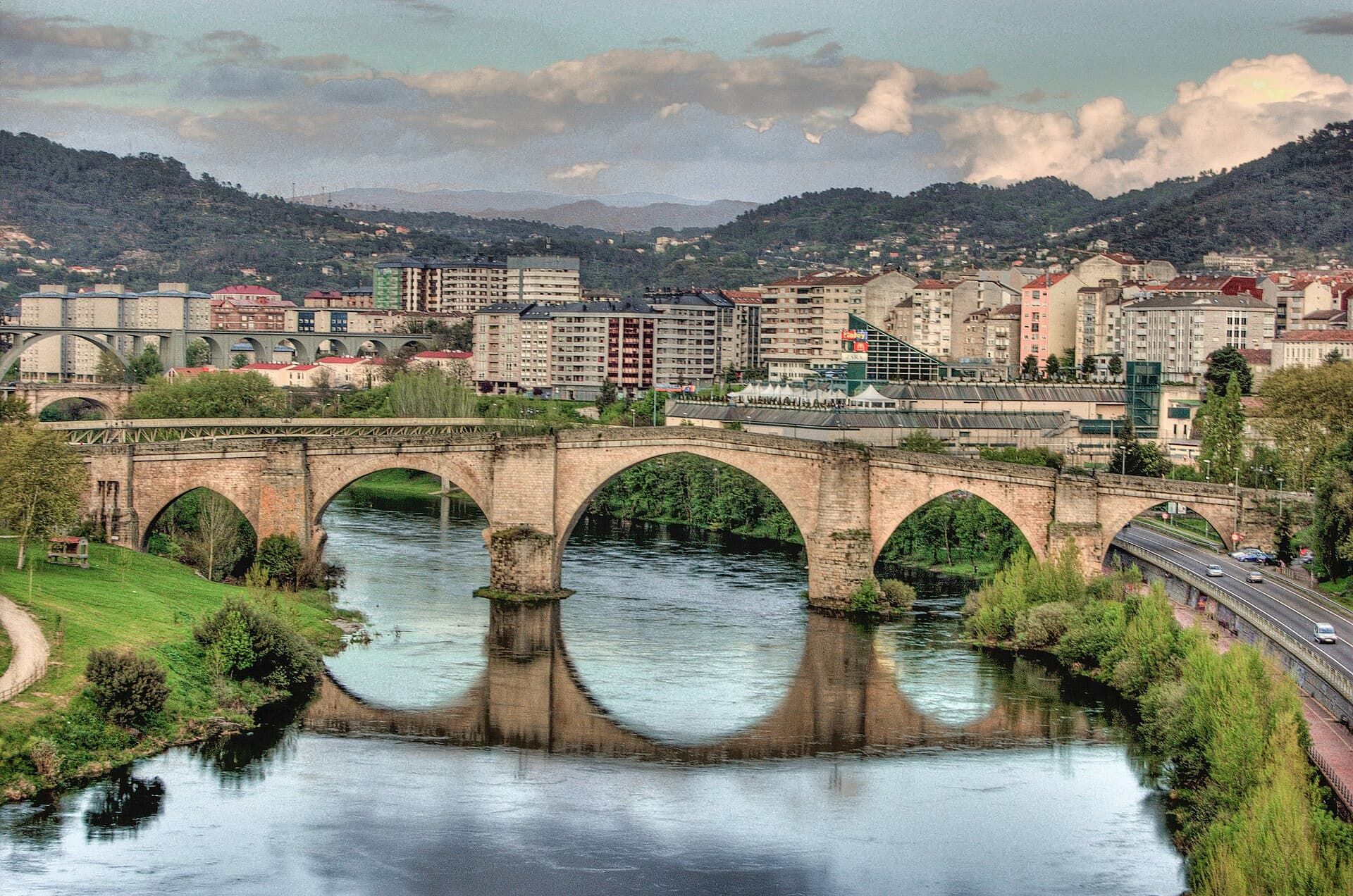
The Major Bridge of Ourense hides much more than just the medieval and Roman engineering that supports it. One of the stories that rarely appear in tourist brochures relates to a niche in the central arch of the structure. During periods of political agitation in Spain, specifically involving the figure of Juan Manuel Pereira de Castro—a Republican politician who inspired the literary work "O señorito Reboraina" by Otero Pedrayo—the site served as a hideout.
The narrative tells that he would have sought refuge in the cavity of the arch while his wife, a local resident, brought him food during the nights to avoid his capture for conspiring against the regime. This detail, described by local experts such as Juan Carlos Rivas in the book "The Major Bridge," transforms a stone monument into a living archive of resistance and human chronicles that define the city's personality.
Practical Itinerary for Visitors
For those planning to spend a few days in Ourense, the city is a strategic stop on the Sanabrés Way, one of the routes of the Camino de Santiago. The Old Town (Historic Center) is classified as a Cultural Heritage Site and is the ideal starting point for any walking exploration. Walking through there, visitors will quickly notice that architectural preservation is a priority, making it easy to access the main points of interest without the need for public transportation within the historical perimeter.
It is recommended to check the cultural agenda on the Deputación de Ourense website before the trip. They usually list activities that go beyond passive visits, including events that highlight Galician cuisine and regional festivals that keep the province's identity alive. Remember that, when visiting historical sites in Spain, respect for signage and conservation rules is essential for these treasures to remain open to the public.
Sources
- Ourenseplan - Origins of Ourense
- La Región - Historical Curiosities of Ourense
- La Región - The History of Ourense Summarized
- Cover photo: Victor Hermida Prada / Wikimedia Commons, license CC BY 2.0
Enjoyed it? Don't miss what's next.
Articles, guides and opportunities for Brazilians in Spain, straight to your inbox.
Our social media
Follow our posts wherever you prefer.
What did you think of this content?
Comments
Leave a comment
Your email won't be published. Comments go through moderation before appearing.
Review before sending — comments can't be edited after submission.
0/1000More in Articles
Arcos de la Frontera: A Guide to the Architecture of the Pueblos Blancos
Explore the historic houses and fortresses of Arcos de la Frontera, one of the most emblematic destinations in the province of Cádiz, with this architectural guide.
Guide to Traditional Festivals in Sóller: From Es Firó to Sant Sebastià Fire Festival
Discover the most authentic traditions of Sóller, from the historic Es Firó celebration to the ancient fire festivals that mark the local calendar.
Traditional Festival Guide in San Lorenzo de El Escorial: From August 10th to the Pilgrimage
Discover how religious tradition and popular culture come together in San Lorenzo de El Escorial. Learn about the local festivals that bring this Real Sitio to life.
Malaga Beyond the Obvious: 10 Secrets and Curious Facts About the Capital of Costa del Sol
Discover hidden secrets, unusual traditions, and historical facts that make Malaga one of the most surprising cities in Spain for those who live here.