

Oviedo: origins, the Santiago route, and the city of statues
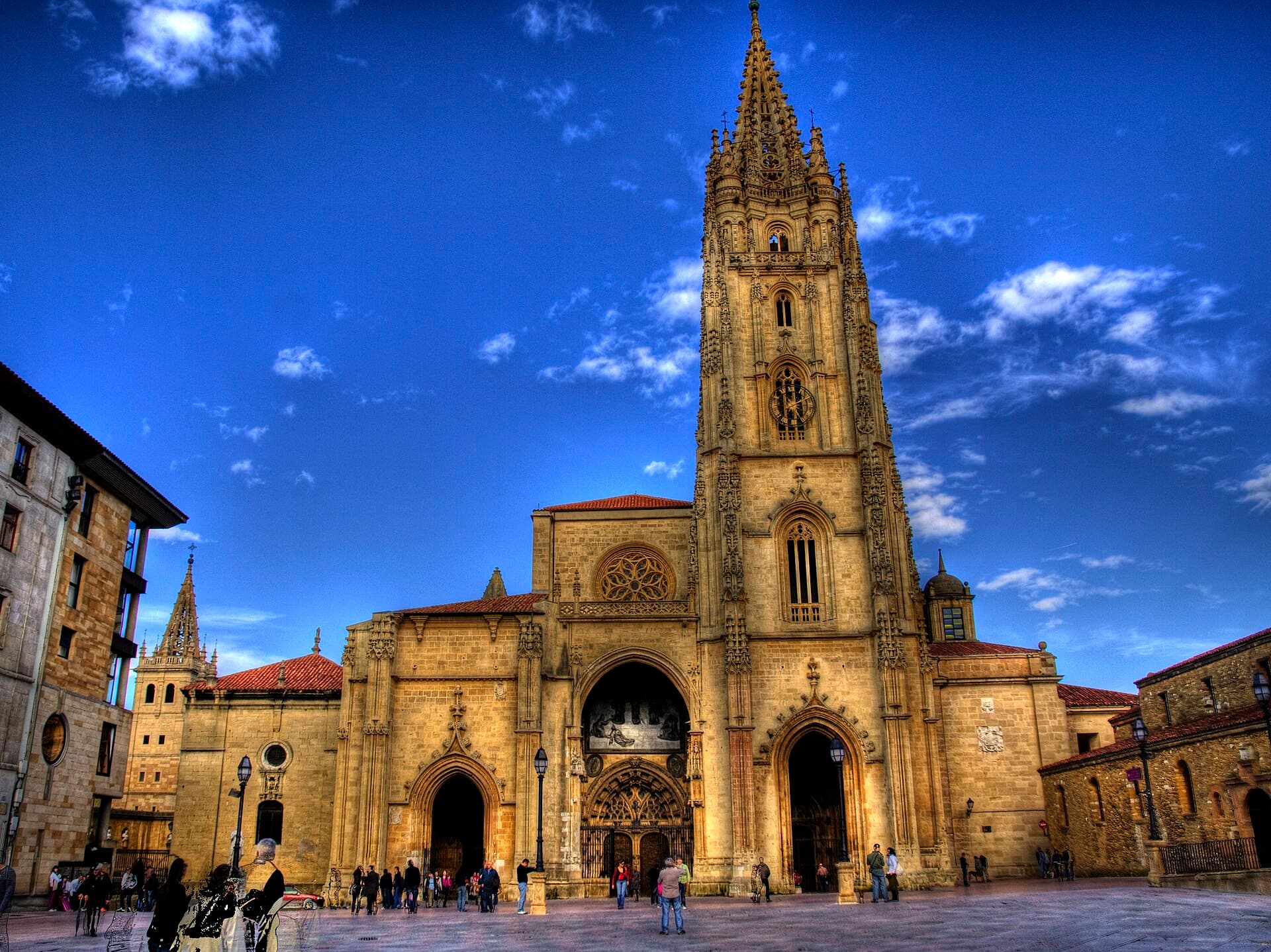
Oviedo: origins, the Santiago route, and the city of statues
Discover how a small 8th-century settlement became the Asturian capital and why walking through Oviedo is an immersion in legends and medieval history.
The birth of the Asturian capital in the 8th century
The history of Oviedo (or Uviéu, in Asturian) begins with a modest agricultural initiative. In the year 761, monks Máximo and Fromestano established a small temple dedicated to Saint Vincent on a hill then known as Ovetao. What was merely a place of monastic retreat quickly grew to become the epicenter of the Kingdom of Asturias, shaping the urban structure that residents and visitors find today.
Urban archaeology has been key to understanding what existed before this official foundation. Recent excavations in areas such as the gardens of La Rodriga and the grounds of La Vega constantly seek evidence of earlier occupations. So far, written history and archaeological discoveries confirm that the hill of Ovetao was the starting point for the capital that defines the region's identity.
The gardens of La Rodriga are a tree-lined public space that offers a tranquil perspective on the terrain that holds layers of the city's urban history.
The La Vega area is a sector of great archaeological significance, where the soil preserves important vestiges that help tell the historical evolution of Oviedo.
Historical connection with the Camino de Santiago
One fact that many tourists are unaware of is that Oviedo is the point where one of the world's most famous pilgrimage routes was born. In the 9th century, Asturian monarch Alfonso II, upon receiving news of the discovery of the apostle Santiago's tomb, decided to leave the city heading towards Compostela. This journey, undertaken by the king, established the route now known as the "Primitive Way".
When visiting the city, it is possible to follow the footsteps of this history by visiting monuments that attest to the importance of the monarchy at the time. The Church of San Julián de los Prados is a fundamental example of the architecture of that period. Furthermore, one cannot ignore the La Foncalada, a historical fountain built by King Alfonso III in the 9th century. Located outside the old walls, its importance is so great that it was recognized as a UNESCO World Heritage Site.
The Church of San Julián de los Prados is a monument of great architectural value, standing out for the preservation of structures that refer to the early times of the Asturian monarchy.
La Foncalada is a notable historical fountain that demonstrates care for urban infrastructure since the earliest periods, maintaining its charm as a cultural point of interest.
The city of statues and urban contrast
Walking through the center of Oviedo reveals a surprise at every corner: the city is widely known as the "City of Statues". Public space is occupied by dozens of sculptures that honor historical figures, literary characters, and elements of local culture, turning a walk into a visit to an open-air museum.
This environment coexists with an urban structure that reflects the city's growth at the end of the 19th century. Uría Street, dating back to 1874, marked bourgeois expansion and became the main artery of commercial life. Near it, the Campoamor Theatre — inaugurated in 1892 — represents the cultural peak of the era. Visitors can observe the contrast between this modern center and the "medieval ring," where the street layout refers directly to the original foundation by Máximo and Fromestano.
Uría Street is the city's main and commercial thoroughfare, being a central point to observe the architecture of the urban expansion period in Oviedo.
The Campoamor Theatre is an imposing building and a cultural landmark of the city, consolidated as a reference point for local performing arts.
Tips for exploring the Asturian capital in depth
For those seeking an experience that goes beyond conventional tourist spots, the recommendation is to explore the city's "intrahistory". There are records of legends involving mythological beings and little-documented events that still leave traces in less busy alleys. Turismo Asturias offers guides and materials that compile these curious narratives that often go unnoticed because they are "so visible they are not seen".
It is worth noting that the city also served as a setting for famous film productions, such as the movie Vicky Cristina Barcelona, which helped project its peculiar aesthetic to the world. When planning your visit, always check the cultural agenda available on the Ayuntamiento de Oviedo portal to see seasonal events, temporary exhibitions, and activities that take place in the city's cultural centers throughout the year.
The Ayuntamiento de Oviedo building is the city's administrative headquarters and an important reference point for visitors seeking information and local services.
Sources
- Turismo Asturias: Historias, Leyendas y Curiosidades
- Ayuntamiento de Oviedo
- Cover photo: javier.losa / Wikimedia Commons, license CC BY-SA 2.0
Enjoyed it? Don't miss what's next.
Articles, guides and opportunities for Brazilians in Spain, straight to your inbox.
Our social media
Follow our posts wherever you prefer.

What did you think of this content?
Comments
Leave a comment
Your email won't be published. Comments go through moderation before appearing.
Review before sending — comments can't be edited after submission.
0/1000More in Articles
Gastronomia de Salamanca: a origem dos pratos típicos da cidade
Descubra a história por trás do hornazo, das patatas meneás e de outros sabores tradicionais que definem a identidade culinária de Salamanca.
Historic Neighborhoods of the Canary Islands: Colonial and Indigenous Heritage of the Islands
Discover the origins of iconic neighborhoods in the Canary Islands, where centuries of history, from Guanche culture to colonial-era architecture, remain preserved.
Vigo’s monuments: the history carved into the city’s stone and iron
Explore Vigo's historical landmarks, from ancient archaeological remains to modern sculptures that narrate the transformation of Galicia's largest city.
Deià: a dive into history through the stones of the Serra de Tramuntana
Explore the historical heritage of Deià, one of Mallorca's most iconic villages, and discover how its stone architecture preserves centuries of rural tradition.